Partnerships for the Goals
Strengthen the means of implementation and revitalise the global partnership for sustainable development
Relationships with regional NGOs and government for SDG policy
Institutional Overview
Vinayaka Mission’s Research Foundation (Deemed to be University) (VMRF(DU)) recognises the importance of collaboration with regional government bodies, non-governmental organisations, public institutions and community-based organisations in advancing the Sustainable Development Goals (SDGs). Through its constituent institutions, academic departments, faculty members and student organisations, the University engages with external stakeholders in environmental protection, public health, community welfare, sustainable development and social responsibility.
These engagements provide opportunities for knowledge exchange, expert participation, community consultation and collaborative action on regional development priorities. The University encourages partnerships that connect academic expertise with public-sector initiatives and community needs, contributing to the broader implementation of the SDGs.
Engagement with Regional Government and Public InstitutionsVMRF(DU) has participated in several initiatives in collaboration with government departments and public institutions.
The University’s engagement with the Botanical Survey of India, National Orchidarium and Experimental Garden, Yercaud, included participation in the Swachhata Hi Seva initiative on 26 September 2025. Following an official request dated 24 September 2025, 50 NSS volunteers participated in cleanliness activities in the Shervaroyan Temple area.
The University has also engaged with the Tamil Nadu Forest Department and Salem Forest Division through environmental awareness programmes, World Ozone Day activities and forest-conservation initiatives. Students and faculty members participated in seed-ball preparation, conservation awareness and environmental activities. A VMRF faculty member also served as a jury member in the WILD FRONTIER’S 25 forest-conservation innovation initiative, which brought together approximately 300 college students to present conservation-related ideas.
Further engagement with the Department of Environment and Climate Change, Government of Tamil Nadu, and the District Child Protection Office, Salem, included participation in programmes addressing climate change and environmental impacts. VMRF faculty members contributed academic perspectives and shared solutions relating to environmental sustainability and a greener Yercaud.
The University also participated in district-level public-health initiatives involving the Salem District Leprosy Prevention and Control Unit, Salem District AIDS Prevention and Control Unit (DAPCU), and the TB Unit, Primary Health Centre, Kannankurichi. These programmes addressed leprosy awareness, HIV/AIDS prevention, tuberculosis awareness and community health education.
Collaboration with Regional NGOs and Community OrganisationsVMRF(DU) works with civil-society organisations and community partners to promote environmental responsibility, public health and sustainable development.
The University participated in the Mission Clean & Green initiative organised by ECO-FREAK Organization at Yercaud on 10 February 2025. The programme included tree planting, environmental awareness, cleaning activities and the distribution of more than 500 seed balls, with the participation of 25 NSS and EVS volunteers.
The University’s Aarupadai Veedu Medical College, Puducherry, organised a seminar on “Role of Youth in Environmental Protection and Conservation” on 1 March 2025, with GRAMIUM Trust and in association with Vishwa Yuvak Kendra, New Delhi. The programme included expert contributions from WWF-India and Amrita Vishwa Vidyapeetham and brought together more than 200 students, faculty members and environmental enthusiasts. The seminar promoted youth leadership, environmental activism, conservation and academic contributions to sustainability.
At the community level, Vinayaka Mission’s Homoeopathic Medical College and Hospital collaborated with Elampillai Rotary Club to organise a free Homoeopathic Medical Camp on 12 October 2025 at Elampillai, Salem. The camp provided healthcare services to 57 beneficiaries, including blood glucose testing for 42 patients.
The University’s College of Nursing, Karaikal, also coordinated community-health activities with Government Hospital, Karaikal. These included a blood donation camp on 29 September 2025, in which more than 10 nursing students voluntarily donated blood, and nutritional support for two tuberculosis patients through a six-month support initiative.
Environmental Protection and Sustainable Community InitiativesThe University promotes collaborative environmental action through partnerships with government departments, educational institutions and local authorities.
On 25 September 2025, Aarupadai Veedu Institute of Technology conducted a Swachhata Pakhwada rally and coastal-cleaning activity at Tiger Cave, Mamallapuram, in association with the Tamil Nadu Archaeological Department. More than 200 students participated, and approximately 300 kg of waste was collected and handed over to the Mamallapuram Municipality.
Other initiatives included seed-ball preparation and conservation awareness programmes conducted with the Tamil Nadu Forest Department, environmental education activities with Sona College of Arts and Science, and participation in government-supported environmental awareness programmes.
These activities demonstrate the University’s commitment to collaborative environmental responsibility and regional sustainability.
Contribution to Sustainable Development Policy EngagementVMRF(DU) recognises that effective SDG policy development requires sustained engagement between academic institutions, government authorities, NGOs and communities. The University’s regional partnerships provide a foundation for sharing academic knowledge, identifying community needs and supporting evidence-informed approaches to sustainable development.
Through its participation in environmental, public-health and community-development initiatives, the University contributes expertise and institutional resources to regional sustainability efforts. The University aims to strengthen these relationships through structured consultations, documented recommendations, collaborative research, policy-oriented discussions and follow-up engagement with relevant government and civil-society organisations.
Commitment to Strengthening Regional PartnershipsVMRF(DU) remains committed to strengthening its relationships with regional NGOs, government departments, public institutions and community organisations. The University will continue to encourage collaborative initiatives that address regional sustainability challenges and contribute to the achievement of the Sustainable Development Goals.
By connecting academic knowledge, community participation and institutional partnerships, VMRF(DU) seeks to support inclusive, evidence-informed and sustainable regional development.
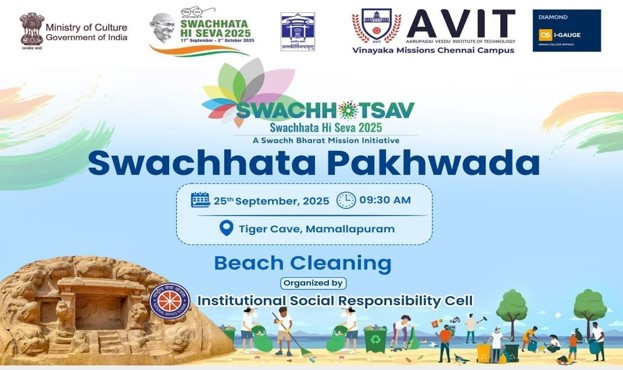 Beach Cleaning Program
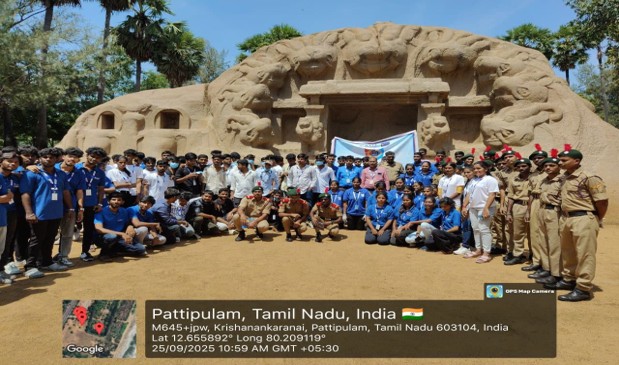 Beach Cleaning Program