Partnerships for the Goals
Strengthen the means of implementation and revitalise the global partnership for sustainable development
Cross sectoral dialogue about SDGs
1. 5th International Conference on Nanoscience and Nanotechnology for Energy, Environment and Biomedical Applications (iNEEBA-2025)
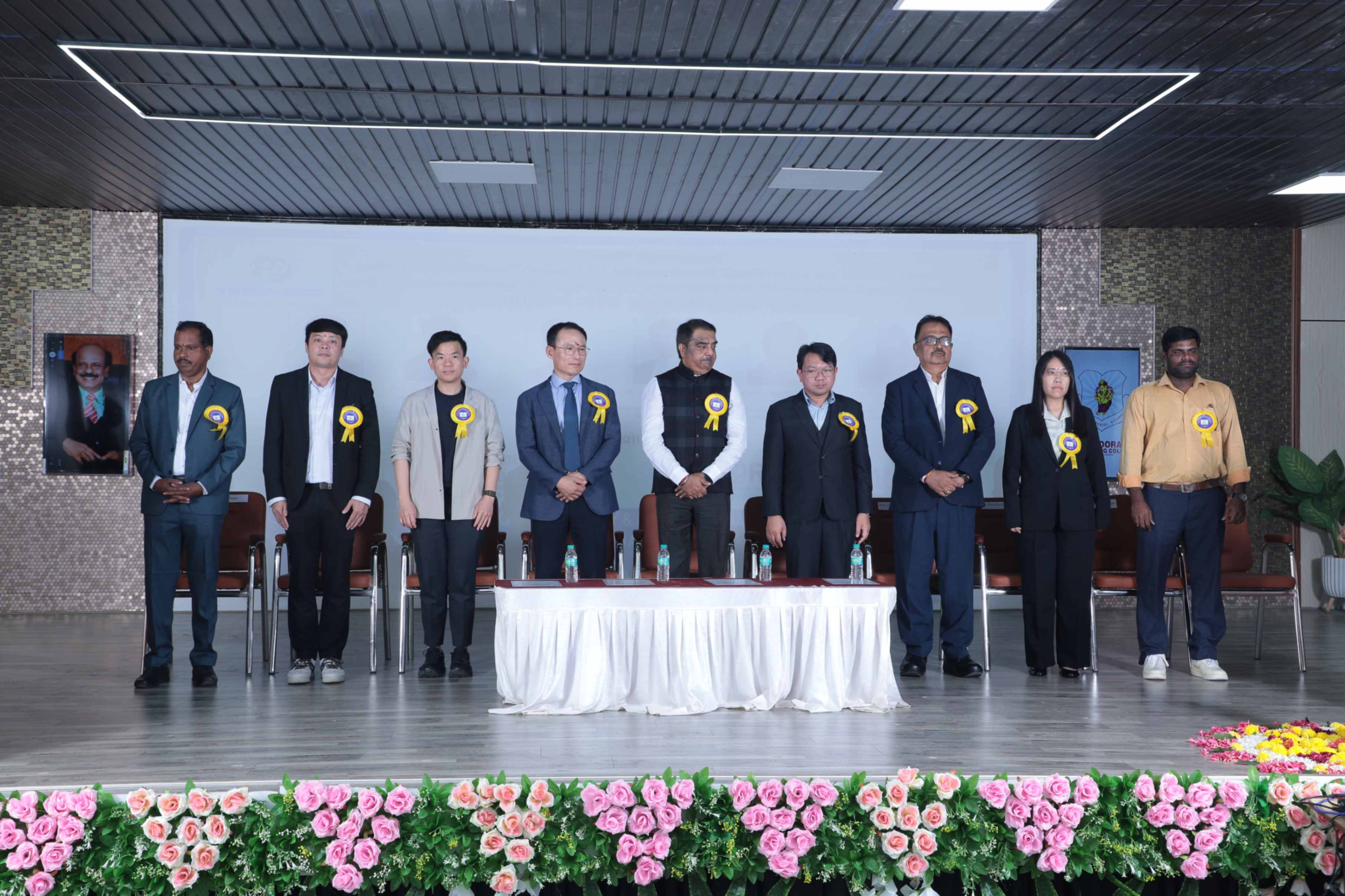
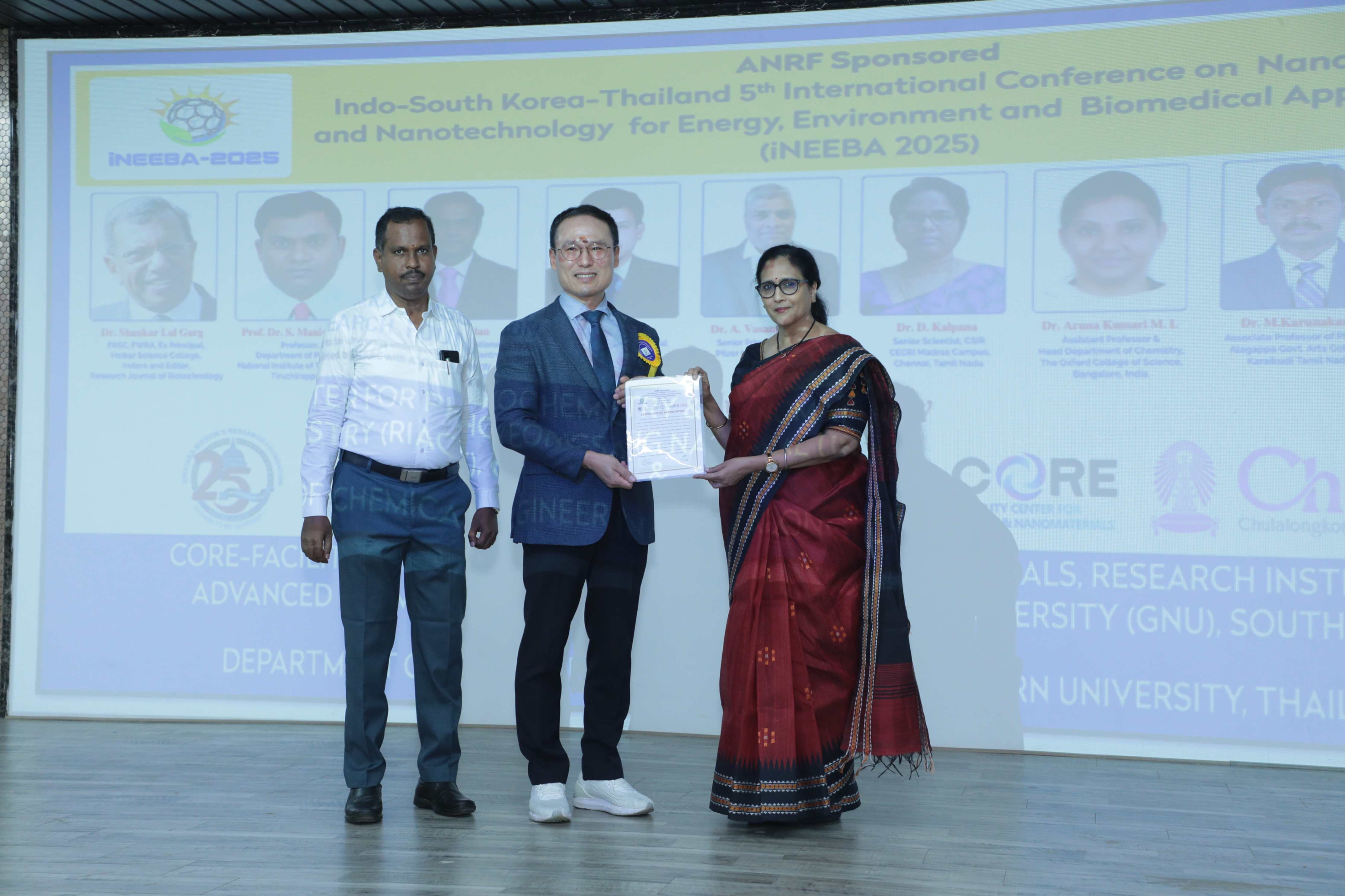
In October 2025, Vinayaka Mission’s Research Foundation (Deemed to be University), through its constituent institution Vinayaka Mission’s Kirupananda Variyar Arts and Science College, initiated and participated in cross-sectoral dialogue on research and innovation themes relevant to the Sustainable Development Goals by jointly organising the ANRF-sponsored Indo–South Korea–Thailand 5th International Conference on Nanoscience and Nanotechnology for Energy, Environment and Biomedical Applications (iNEEBA-2025), held on 13–14 October 2025 in Salem, Tamil Nadu. The conference was organised in collaboration with Gyeongsang National University, Republic of Korea, and Chulalongkorn University, Thailand. Its programme brought together academics, international scientists, public research-institution representatives and an industry expert through keynote lectures, invited talks, and oral and poster presentations. Discussions covered clean-energy technologies, hydrogen production, energy storage, renewable-energy integration, environmental remediation, water-pollution treatment, advanced materials and biomedical applications. These exchanges contributed to cross-sectoral knowledge-sharing relevant particularly to SDGs 6, 7, 9, 13 and 3. The conference brochure, programme and published proceedings provide documentary evidence of the event, its partners, speakers and research themes.
2. SDG relevance demonstrated· SDG 7 – Affordable and Clean Energy: Hydrogen production, rechargeable zinc–air batteries, renewable-energy integration, green-fuel synthesis, energy storage and photoelectrochemical water splitting.
· SDG 6 – Clean Water and Sanitation: Research on nitrate remediation, wastewater treatment and pollutant removal using electrochemical and nanomaterial-based approaches.
· SDG 13 – Climate Action: Clean-energy systems, environmental remediation and technologies that can support lower-carbon development.
· SDG 9 – Industry, Innovation and Infrastructure: Nanotechnology, advanced materials, technology development and industrial applications.
· SDG 3 – Good Health and Well-being: Biomedical applications, diagnostics, therapeutics and nanoparticle-based drug delivery.
· SDG 15 – Life on Land: The invited lecture on ecological balance and human development for a sustainable future, alongside proceedings content on biodiversity and environmental protection.
3. Cross-sectoral participation and dialogueInternational higher-education partners
The
conference was jointly organised with Gyeongsang National University (South
Korea) and Chulalongkorn University (Thailand). Their representatives appear in
organising/advisory committees and keynote or invited speaker roles. This
establishes international university collaboration.
Public research institutions and government-linked research
The
proceedings list speakers and contributors affiliated with public research
organisations including CSIR–Central Electrochemical Research Institute (CECRI)
and the International Advanced Research Centre for Powder Metallurgy and New
Materials (ARCI). The conference was identified as ANRF-sponsored.
Industry participation
The
programme includes an invited lecture by a Senior Principal Scientist from
Pfizer Healthcare Pvt. Ltd., Chennai, on nanoparticle drug-delivery systems in
the pharmaceutical industry.
Cross-disciplinary dialogue
The
programme covered hydrogen production, zinc–air batteries and grid-scale energy
storage, solar utilisation for green-fuel synthesis, synchrotron techniques for
energy storage, photoelectrochemical water splitting, ecological balance and
human development, and nanotechnology in health.
Research exchange
The proceedings include keynote and invited lectures and a substantial collection of oral and poster presentations. The organising committee’s message records that more than 200 research papers were submitted.
 iNEEBA - 2025
 iNEEBA - 2025